Design Protocolsinterface documentation
Ordinal Bin
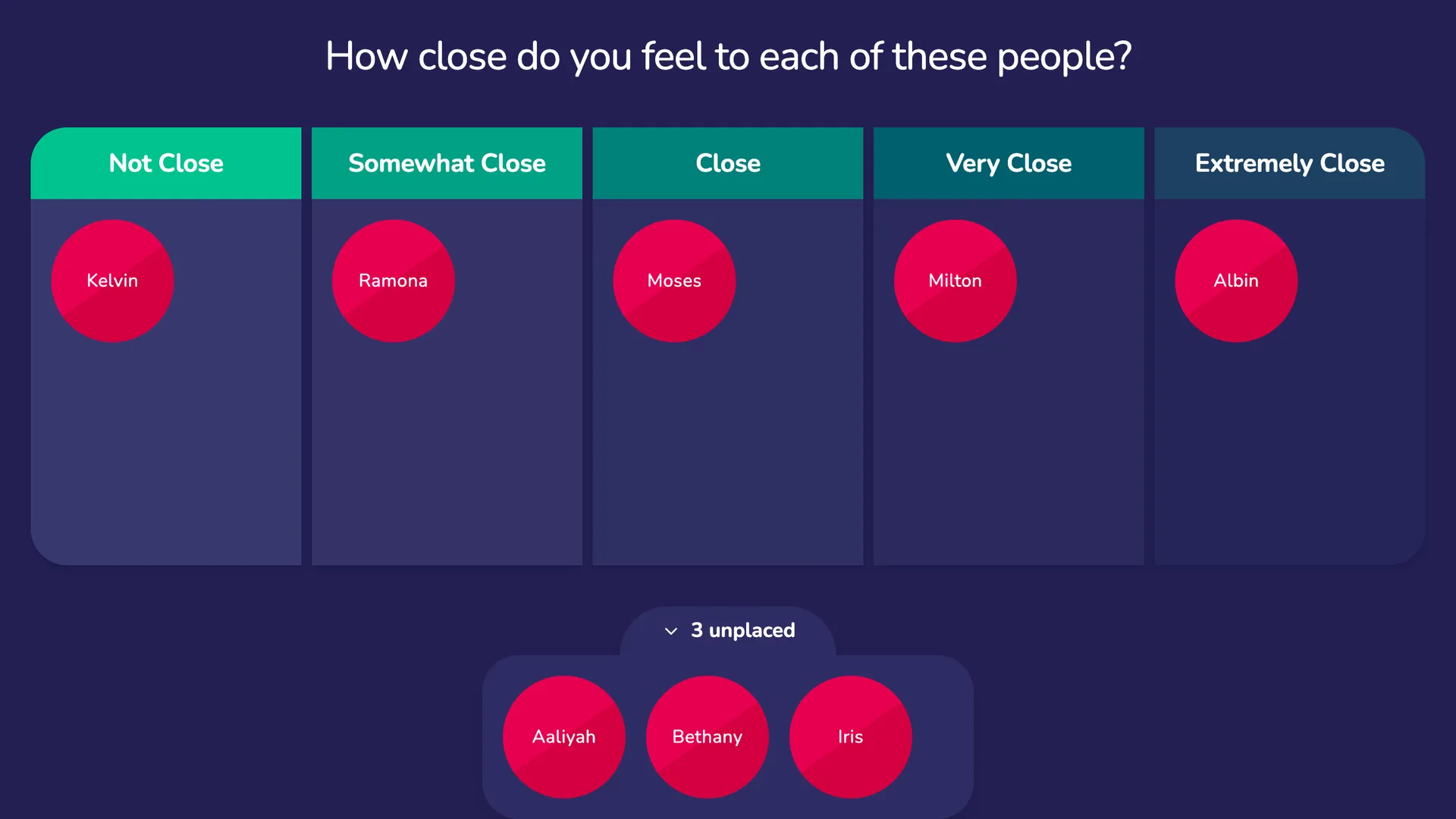
- Type
- Name Interpreter
- Creates
- Ordinal attribute data on a single node type
- Uses Prompts
- Yes
- Schema
- v1+
- Available In
- Architect ClassicArchitectInterviewer ClassicInterviewerFresco
The Ordinal Bin is a name interpreter Interface that captures ordinal data on the alters in a participant's network. When using the Ordinal Bin, participants drag and drop alters one-by-one into parallel bins denoting values on an ordinal scale. Once placed, participants can move alters from one bin to another.
Configuring Ordinal Bin
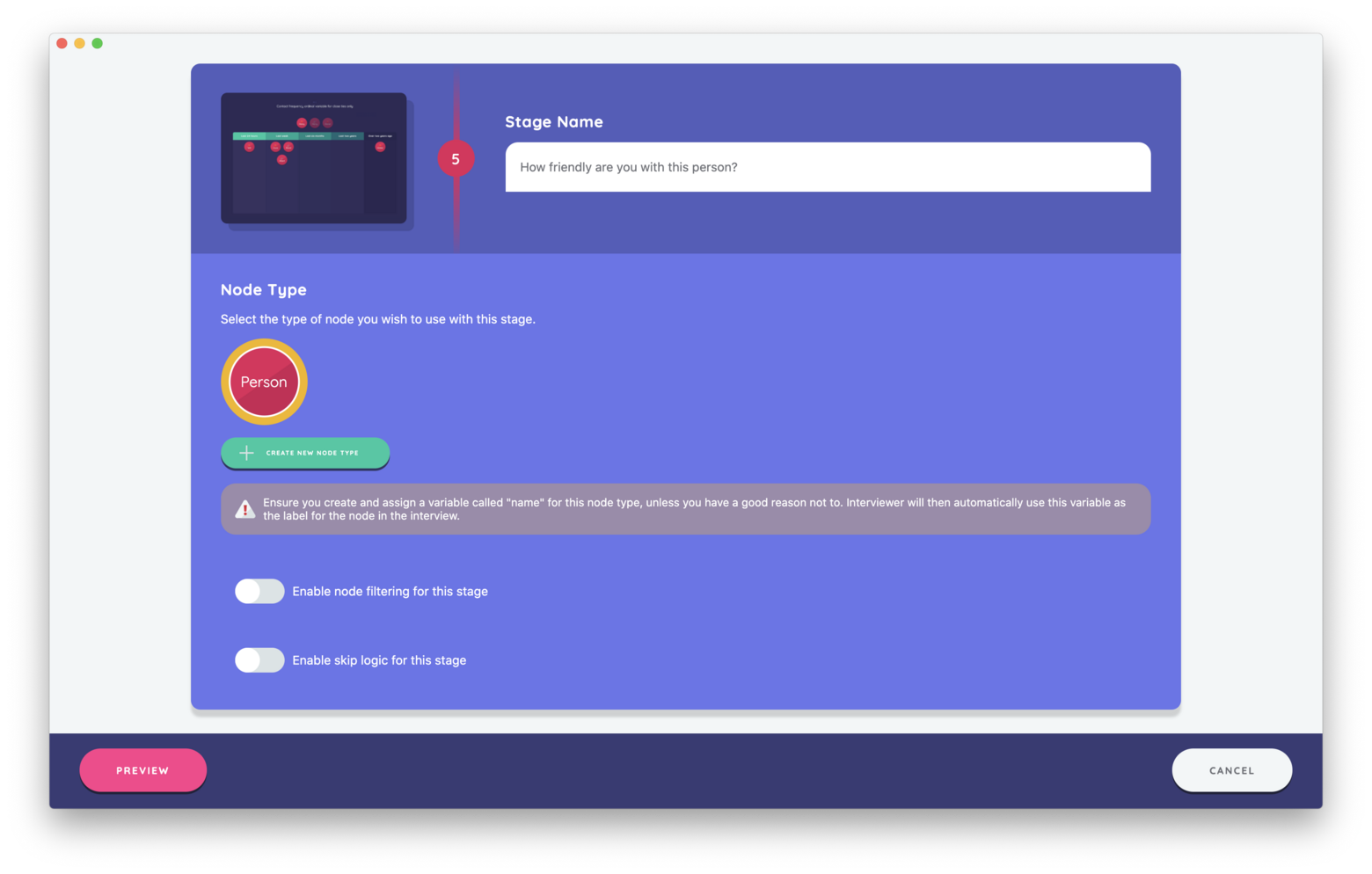
A single node type is selectable per screen. This screen supports filtering those nodes by their attributes.
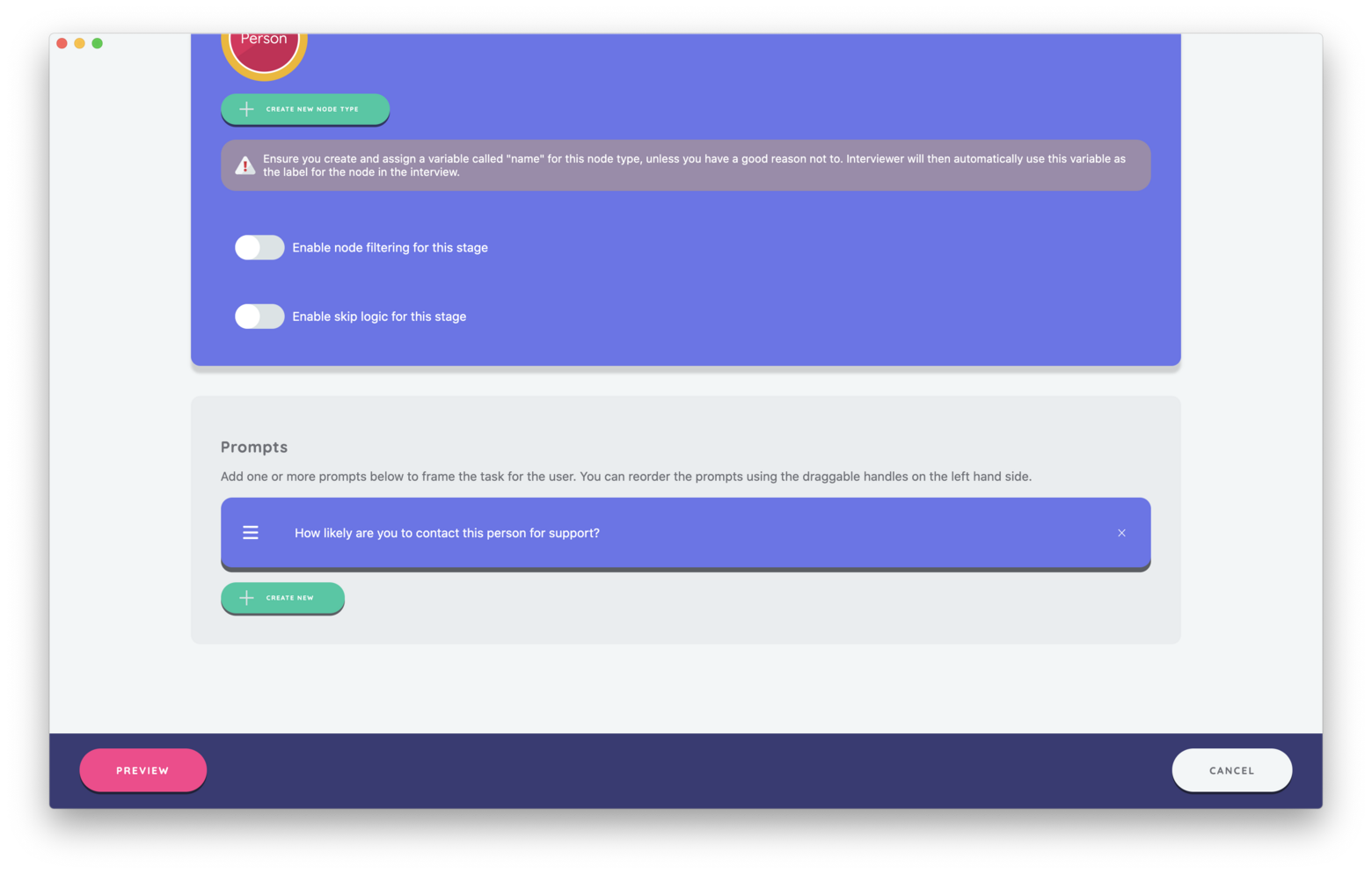
An Ordinal Bin screen can include multiple prompts, each of which relates to a single ordinal variable.
Best Practices
Use this Interface to collect ordinal or interval scale data on alters. Although a Likert Scale can be added as an input control on other interfaces, the drag and drop functionality on the Ordinal Bin provides a tactile method to capturing these data that is engaging for participants.
Try to Avoid
Due to size affordances, avoid using scales of more than six bins on this Interface. Larger scales cause bin labels to be difficult to read and the other visual components on the Interface become compromised.
Bin labels can be a good deal longer than a word or two — a short sentence is fine. Each label shrinks, a step at a time, to fit the space its bin has rather than being cut off mid-word, and a screen reader always reads the whole label. That shrinking has a smallest size, though: a label long enough to overflow its bin even at that size is clipped, which is most likely with a larger scale or on a small screen. Check your longest label in preview at the size participants will use. Labels can use bold and italic text for emphasis. Short labels stay larger and are easier to read at a glance.
Resist using this Interface to collect nominal data that would be more suitable for capture on the Categorical Bin.